Recruitment is more about timing than database size.
A database containing 100,000 candidates sounds impressive.
But how many of them are still doing the job listed on their CV? How many still live in the same city? How many would consider changing jobs or moving somewhere new? How many are available? How many would answer your call or reply to an email today?
Ten years of CVs tells you what happened. Recruitment is about what is happening today.
The real opportunities appear when something changes:
- A candidate has a bad day at work and decides it is time to move.
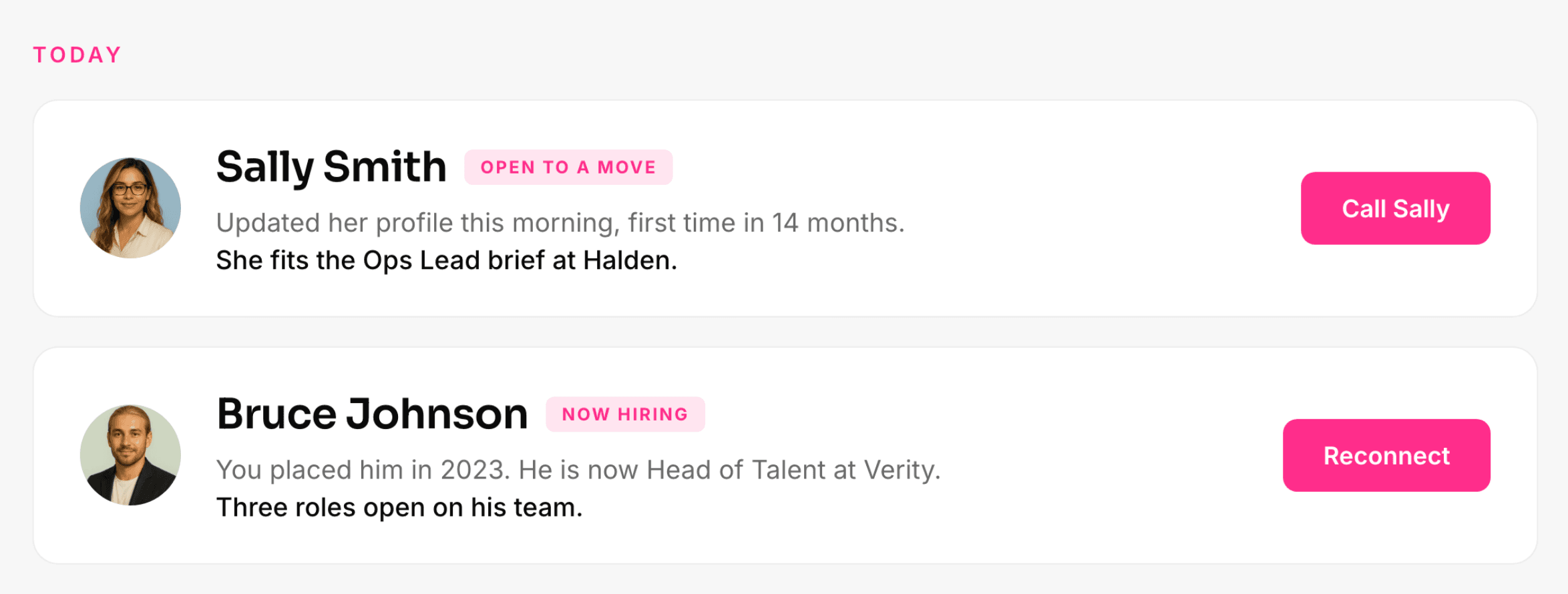
- A former placement becomes a hiring manager.
- A company starts building a new team.
- A client posts a new role before calling you.
- A candidate you submitted to a client now works there.
These moments matter far more than the number of records sitting in a system, and they happen every day.
Most ATS platforms were built as systems of record. They rely on consultants to add notes and update records manually.
Today, a recruitment platform should be self-updating. It should regularly check in with candidates, understand their current situation, monitor job-title changes and make it easy for them to refresh their preferences. It should also monitor what is happening around clients and contacts and let you know when something important changes.
Candidates should be an active part of that process. They should be able to update their own details, tell you when they are open to a conversation and mute their profile when they are not.
When consultants log in each morning, the system should already know what has changed and show them what matters.
This creates something much more useful than a large database: a live picture of the market that is constantly refreshing and keeping everyone in the loop. It means fewer opportunities are missed simply because nobody knew they were there.
TL;DR: The best database isn’t the one with the most records. It’s the one that knows what changed today.
This is what Lovelio was built to do. Book a demo and see it in action.